For many families in Bihar, the most important sweet of the year isn’t made for a wedding or a birthday. It’s made for the Sun.
A sweet made for Chhath
Chhath is one of the most important festivals in Bihar. Over four days, families pray to Surya, the Sun, and to Chhathi Maiya. They stand in rivers and ponds to offer arghya to the setting sun, and again to the rising sun the next morning. The bamboo soop and daura carried down to the water hold fruit, sugarcane and, almost always, thekua.
How it’s made at home
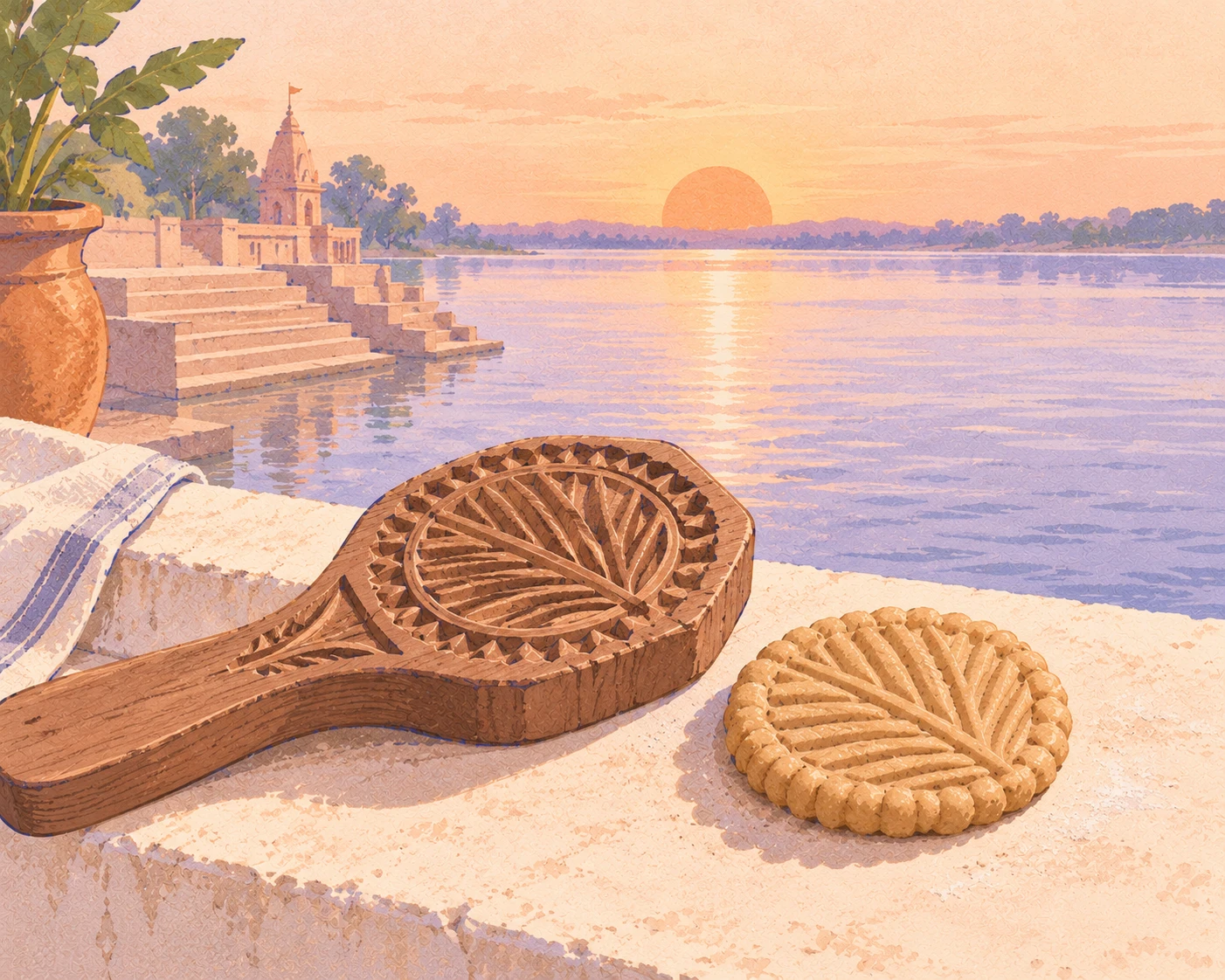
In most homes, thekua is made from whole wheat flour, jaggery and ghee, sometimes with fennel, cardamom or grated coconut. The dough is kept stiff and pressed into a carved wooden mould called a sancha, so each piece carries a pattern. Then it’s fried slowly until it turns a deep gold.
For Chhath, many families make it with special care: a freshly scrubbed kitchen, clean utensils, and no tasting until the offering has been made.
The morning at the ghat
Before dawn on the last day, the ghats fill up. Lamps flicker along the water’s edge, Chhath songs carry across the river, and everyone waits for the first light. When the sun rises, the offering is made and the prasad is shared: a piece of thekua for everyone who came, and many more wrapped up for the people who couldn’t.
Why it travels so far
Thekua is dry, firm and sturdy, so it survives a long journey. That’s why it ends up in so many parcels: packed into a steel dabba, wrapped in newspaper and sent to a hostel room or a flat in another city. For many people who left Bihar, its taste is the Chhath they couldn’t travel home for.
Thekua at Dalan Tales
Our Traditional Bihari Thekua is inspired by these home recipes, and made by local people in Bihar following traditional methods. Its ingredients, net weight and shelf life are on the product label.