
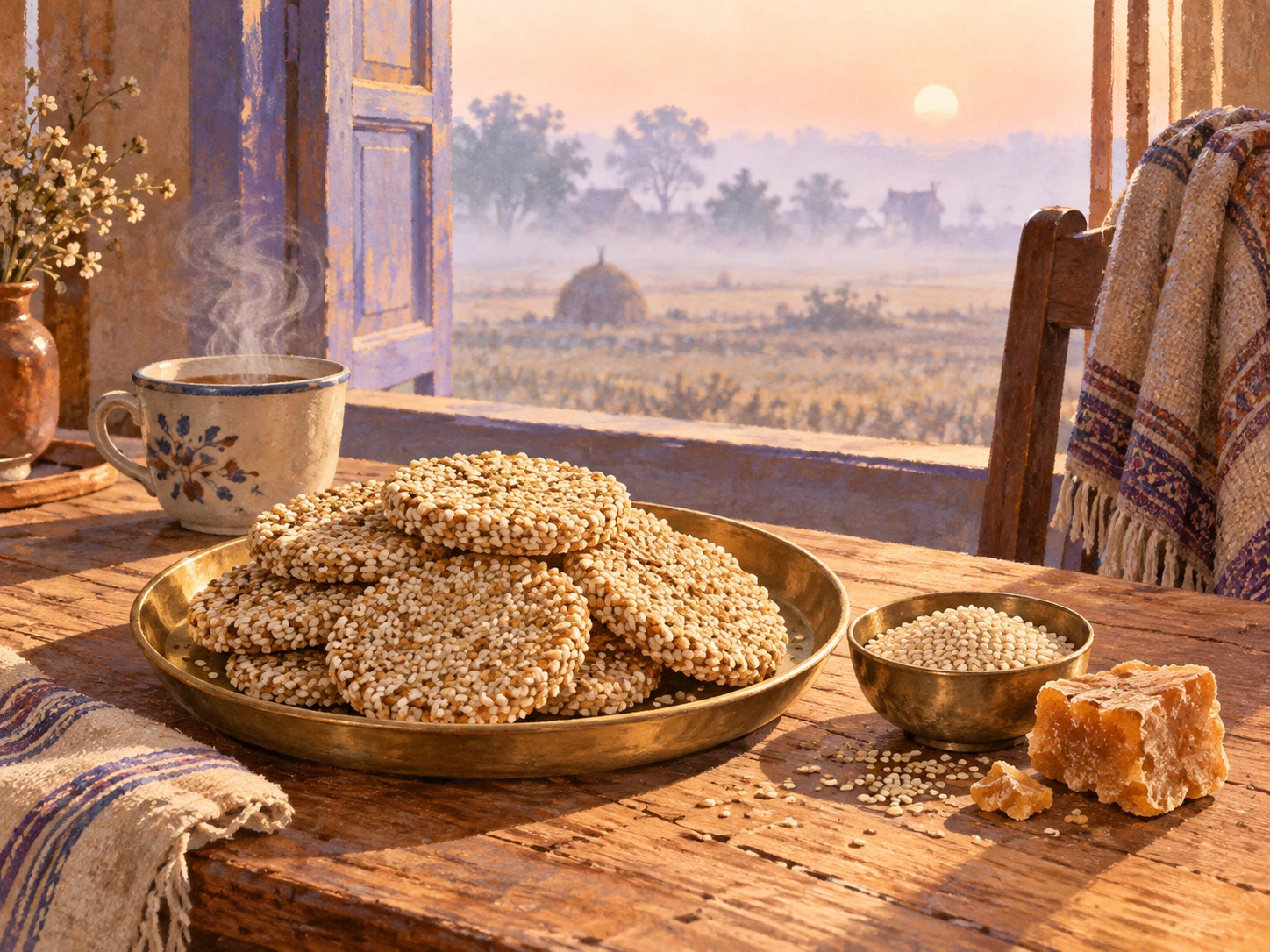
When the winter fog settles over Bihar, the sound of pounding starts in Gaya.
A sweet named for how it’s made
Til means sesame, and kut comes from pounding. Tilkut is made by cooking sesame with jaggery or sugar and then pounding the mixture by hand into thin, crumbly discs. It’s slow, heavy work, and it’s what gives tilkut its texture: crisp at the edge, melting in the middle.
A winter sweet
Tilkut is made through the cold months, and it’s everywhere around Makar Sankranti in January, when sesame and jaggery are part of the festival in many homes. Many people say the best tilkut comes from Gaya, where its makers have worked through the winter for generations.
On the plate
In many families, Sankranti morning means dahi-chura, with tilkut on the side. The rest of the box disappears over the following weeks, one piece with every cup of tea.